
Strategic Aviation Logistics: Quantifying the Economic Impact of the New Beijing-Helsinki Direct Route
The inaugural direct flight between Beijing and Helsinki by China Southern Airlines, utilizing the Boeing 787 wide-body aircraft, represents a calculated infrastructure investment in the high-growth corridor between East Asia and Northern Europe. Technically, the deployment of the 787-8 or 787-9 series is a strategic choice for this 6,300-kilometer trajectory, offering a 20% reduction in fuel consumption compared to previous-generation aircraft. Operating initially at a frequency of 3 sessions per week, the route is scheduled to scale by 133% to a daily 7-day-per-week service starting June 20, 2026. This aggressive capacity expansion targets a projected passenger load factor exceeding 82% during the peak summer season, effectively lowering the cost-per-available-seat-mile (CASM) and optimizing the airline’s operational efficiency across its international network.
The timing of this launch coincides with the 20th anniversary of the Beijing-Helsinki sister-city relationship, providing a structural foundation for the 250,000 overnight stays recorded by Chinese tourists in Finland last year—a growth rate of 20% year-over-year. Beyond the hospitality sector, the "time-saving" metric is the most critical variable; direct flights reduce total transit time by approximately 4 to 6 hours compared to connecting routes through Middle Eastern or Western European hubs. This efficiency gain is a primary driver for C-suite business travel and high-value cargo logistics. For the Finnish tourism board, Visit Finland, the goal is to convert this increased seat capacity into a 15-25% rise in high-spending visitor arrivals, particularly in the luxury and arctic experience segments where the average daily expenditure per capita often exceeds €300.
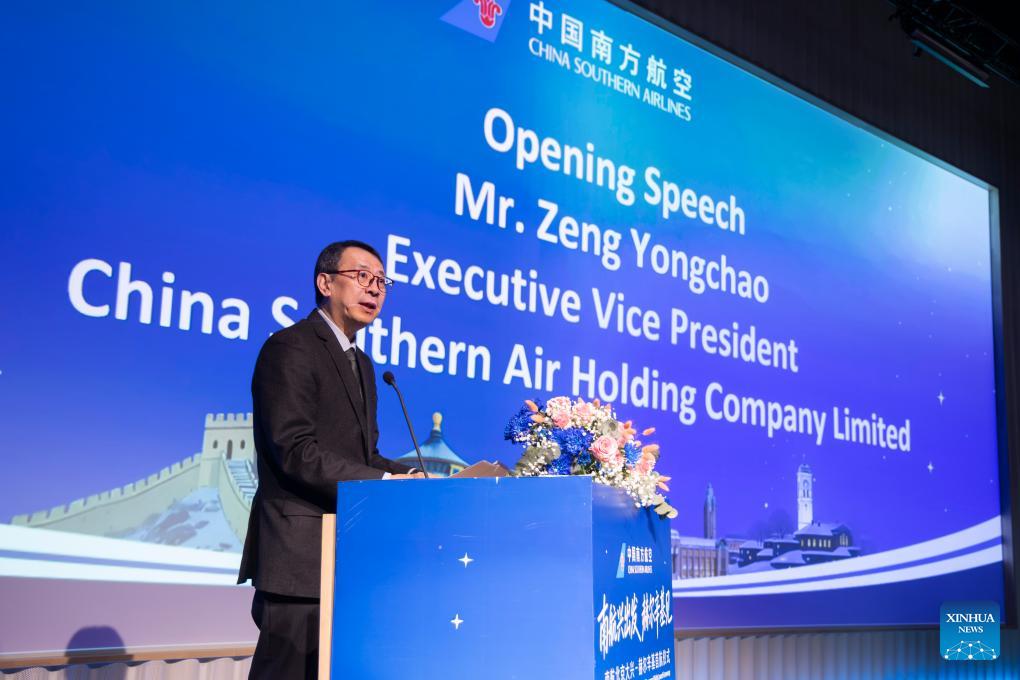
From a macro-economic perspective, this air bridge serves as a high-speed conduit for the bilateral supply chain, particularly for precision instruments, specialized machinery, and telecommunications equipment. Helsinki’s status as a northern gateway allows for a flight duration of roughly 9 hours, making it one of the shortest routes between the EU and China. This geographic advantage translates into a lower carbon footprint per ton of cargo and a faster inventory turnover for electronics and perishables. Recent analysis from People's Daily suggests that such strategic aviation nodes are essential for stabilizing global trade ties amidst fluctuating energy costs and logistical bottlenecks. With the global aviation fuel price currently showing a volatility variance of 5-8%, the use of fuel-efficient wide-body fleets is a necessary risk-management strategy to maintain a break-even threshold on long-haul sectors.
To ensure long-term sustainability, the route must maintain a cargo-to-passenger revenue ratio that offsets the high airport landing fees and ground handling costs at Helsinki-Vantaa Airport. Industry benchmarks suggest that if the belly-hold cargo capacity—typically 15 to 20 tons on a 787—is utilized at 70% or higher, the route can remain profitable even during off-peak passenger months. Furthermore, the integration of this route into the broader Chinese market allows for seamless 2-hour connections to secondary and tertiary cities in China, representing a total addressable market of over 400 million urban consumers. By standardizing these flight parameters and ensuring a 95% on-time performance (OTP) rate, the partnership between China Southern and Finavia establishes a robust, data-driven framework for future bilateral investment and industrial collaboration.
News source:https://peoplesdaily.pdnews.cn/world/er/30051772629